

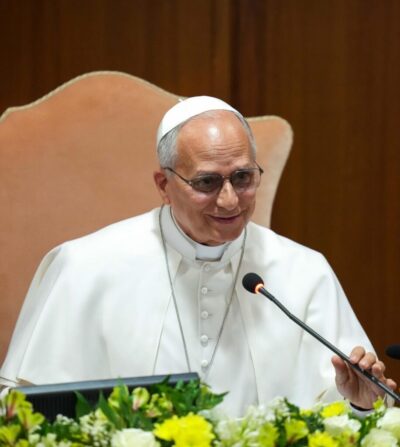
Upon the publication of “Magnifica Humanitas,” Pope Leo XIV’s new encyclical on artificial intelligence and human dignity, World Council of Churches (WCC) central committee moderator Bishop Prof. Dr Heinrich Bedford-Strohm expressed gratitude for the papal social document
“Magnifica Humanitas” (Latin for “Magnificent Humanity”), addresses the rapid technological developments in the age of digitalization, which find their most advanced expression in artificial intelligence.
“This development holds great opportunities, but also great risks,” said Bedford-Strohm. “Technological development has gained such momentum that the rules ensuring its responsible use have not kept pace.”
This makes a global public discussion about such urgently needed rules all the more important, Bedford-Strohm noted. “One of the goals is to establish effective mechanisms to protect freedom and human dignity against data corporations whose monopoly power is now virtually uncontrollable,” he said. “Especially when it comes to artificial intelligence, the core issue is also the concept of humanity.”
WCC general secretary Rev. Prof. Dr Jerry Pillay noted that the WCC has long recognised the advancement and benefits of technology and AI in many areas of life but equally cautioned against the challenges it brings to spiritual, moral, and ethical values if not carefully checked and monitored. “Technology must be used to enhance and develop human life and living and not displace human labour, value, and dignity,” he said. “I am especially grateful to Pope Leo XIV for Magnifica Humanitas, which is very relevant and timely in an age of AI expansion.”
Pillay further noted that the theological approach of the encyclical provides a firmly established position as to why churches need to raise their voices of discernment and caution of the risks and consequences that come with AI.