

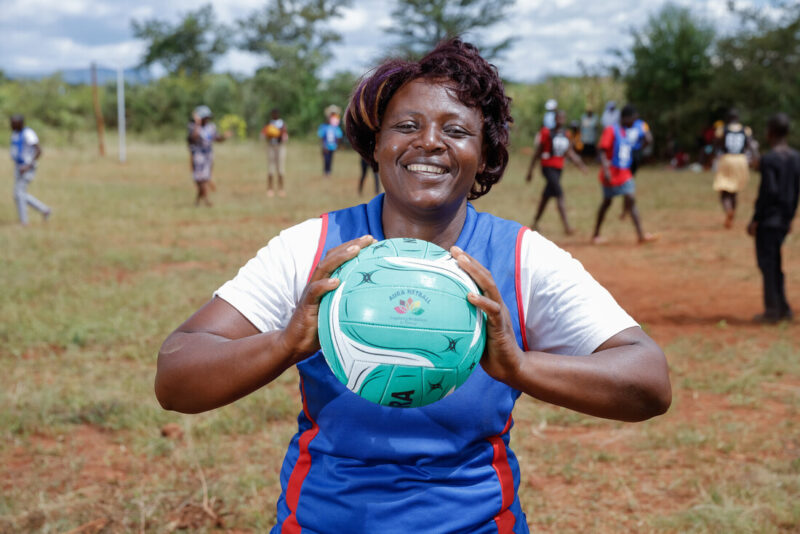
Runyararo community in Zimbabwe is home to many families displaced by Cyclone Idai, alongside the host families who welcomed them. In the aftermath of displacement, tensions and divisions between the two communities were common, as people struggled with overcrowding, limited resources and uncertainty about the future.
Precious lives in the Runyararo with her husband and four children. Like many families in the area, she is part of a community that was displaced by crisis and forced to rebuild life in a new home alongside host families from the surrounding area. When families first arrived, there was little connection between neighbours and many struggled with stress, isolation and uncertainty about the future.
Today, Precious is helping build a stronger and more united community through sport.
Precious is the captain and goalkeeper (GK) of her local netball team, which was established in 2024 through a community sports initiative supported by Zimbabwe Council of Churches and Act for Peace. Funded through the Australian Government’s Australian NGO Cooperation Program (ANCP), the initiative provides sports grounds, equipment and organised activities designed not only for recreation, but for peacebuilding, healing and social connection.
For Precious, netball has become far more than a sport. It is a place where women gather to encourage one another, share burdens, and support each other through challenges at home. She explains that many women come to the courts carrying stress and worries, but leave feeling refreshed, encouraged and emotionally lighter.
“We come together as women,” says Precious. “We then help each other deal with our problems and support one another as neighbours.”
As captain of the team, Precious takes pride in her leadership role. She sees herself as someone who helps hold the team together and contributes to its success. But beyond competition, she believes sport has transformed relationships within the wider community. Through playing together, displaced and host community members have formed friendships, learned to trust one another and built a sense of belonging.
“It is important because it helps us socialise with others and get to know our neighbours,” she says.
“We exchange different perspectives on various matters then combine our ideas together.”