

By David Rose
Social Cohesion is now part of the national discourse. At a time of increasing divisiveness and adversarial methods of debate; discerning what it is that holds our society together is important for the flourishing of all.
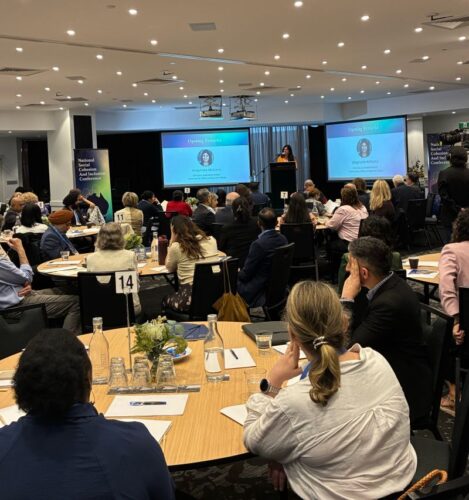
It’s a discussion that the Australian Baha’i community has been engaged in with a series of national conferences aimed to create an inclusive narrative around social cohesion involving participants from government, civil society and industry leaders, academics, media, arts, and community and faith representatives.
It was a privilege to attend his year’s conference which explored an ambitious agenda that included: constructive and unifying dialogue; extending participation through neighbourhoods and communities; redefining relationships across leadership and institutions; and drawing on the capacities of youth.
This conference was an opportunity to engage with people who are thinking deeply about the progress of our country; to deliberate, learn, share ideas and reflect on experience. Here are some insights that resonated with me from the presenters and the roundtable discussions.
Dialogue and Diversity
Australia doesn’t have a diversity problem but a dialogue challenge. Being able to talk respectfully with people from different backgrounds about difficult issues is central to building cohesion. Being able to sit with difference and avoid it becoming exclusion is key. Test ideas respectfully, challenge assumptions but don’t attack dignity. Play the ball not the player! Be humble in asking what am I missing? What assumptions do I hold that block me from hearing different opinions? Being able to listen to different views on issues can contribute to more complete picture that will yield better solutions.
Local Community
Social cohesion starts locally, with welcome, listening and including. A sense of place matters. When people feel welcome and safe in their community, it gives a sense of belonging, of having a stake in what happens for the future of that community. The local is mainly where cohesion is experienced. Community spaces like libraries and community centres have become more important as shared spaces to bring people together. It was noted that progress in cohesion happens at the speed of relationships not policy documents!
First Nations
We can’t build unity by avoiding the truth. In the morning, we had a powerful welcome to country: in the afternoon, we heard that the Stolen Generations was a fundamental break in cohesion. Being forcibly removed from your family, identity, community and culture is the complete opposite of cohesion.
While Australia’s relationship with First Nations is unresolved there can’t be social cohesion. The unfinished business of colonialism and sovereignty never ceded needs to be addressed. Disagreement and discomfort are sometimes necessary. Unity without truth is simply conformity. Beginning with truth telling about the massacres, the Stolen Generation and land grabs is not about blame or shame but for all Australians today to take responsibility for the effects of the past.
Young People
There were some great presentations from young leaders from Mt Druitt and how they are contributing to building community. Their work with young people is underpinned by two questions: Are you lovable? Are you capable? Interpersonal relations and access to education and services are central for young people. They need a consistent person in their lives; a secure place and a sense of purpose. In fact we all do, in order to believe that we matter here in our community!
Church unity, interfaith dialogue and social cohesion
I came away thinking about what ecumenism and interfaith dialogue can learn from the social cohesion dialogue, and how churches are contributing to it. Both the ecumenical and interfaith dialogue movements have developed over the past 100 years. They have gradually shifted Christians away from conflict and even war; to being able to pray together and to engage in positive dialogue while respecting difference without glossing over the hard questions that keep us separated.
How did these breakthrough moments happen? Perhaps insufficient attention has been given to this remarkable journey which has been very good for the Church, for people of all faiths and people of goodwill. More reflection on the methodology of ecumenics and interfaith dialogue would be helpful, so that churches might more fully contribute to cohesion from this rich experience; and lest these historical and present day dynamics become taken for granted.