
Act for Peace CEO, Andrew Hassett and Board Director and Adjunct Senior Research Fellow, La Trobe University, Tim Budge, reflect on why Christians must speak and act for peace as the world grapples with the surging conflict in the Middle East.
In the aftermath of two devastating world wars, Christian leaders helped build a global ecumenical movement grounded in a simple but powerful conviction: that unity, cooperation and shared faith could help prevent the horrors of conflict from happening again. Today, as the world faces the highest number of armed conflicts since 1945, that vision of Christian unity for peace is needed more than ever.
Act for Peace was founded in 1949 to help millions of displaced peoples across Europe after WWII and to help the churches resettle refugees in Australia as part of a global network of concerned ecumenical organisations believing in the power of shared humanity to address such crises. As the international humanitarian agency of the National Council of Churches in Australia, we believe that the Biblical call to seek justice, love mercy and walk humbly with God compels us to stand for peace, to protect human dignity and to work together across divisions for a more just and compassionate world.
Act for Peace has always had a strong commitment to working with others, preventing and responding to conflict and displacement and advancing the foundations for ‘a just society’ to enable lasting peace. We also have a deep commitment to locally led leadership and decision-making. We understand from experience that local communities and displaced people are best placed to make decisions on the issues that impact them, especially in crisis situations.
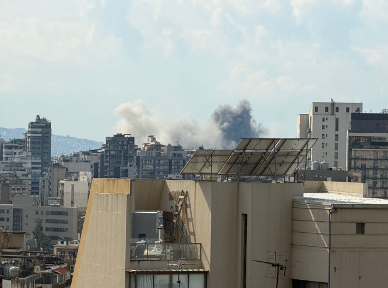
At the time of writing, our trusted partners in the Middle East tell of their growing concerns; of how the recent military attacks across an increasing number of countries in the region are causing destruction and loss of innocent lives, uprooting people from their homes and separating families. In Lebanon, recent military action has led to over 500 deaths and 750,000 people being forced to leave their homes in search of safety. Fifty-five villages in Southern Lebanon were asked to evacuate in the middle of the night with nowhere to go. Entire families fled with nothing, but what they could quickly gather and carry.
As always, it is innocent people that suffer first and worst. In the words of a staff member from ACT Alliance, “The Arab region is once again being scarred by violence that is difficult to put into words.” As they report, this escalation means that civilians are bearing the cost across the region: Syria, Gaza, the West Bank, Lebanon, Iraq, Jordan, Israel and the Gulf countries are all under attack. The view on the ground is of a broader regional context in which violence has become politicised and normalised, with civilian suffering being increasingly overlooked. Our partners in the region continue to ask, “But how can this suffering be normal?”
Throughout our history, Act for Peace has responded with practical, humanitarian assistance, motivated by love and a commitment to God’s justice. We are again supporting a humanitarian response to this escalating crisis. However, our very name and our commitment to peace challenges us to ask, “What does it mean to be peacemakers, how do we speak and act for peace in this world context?”