
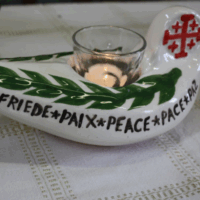
We know that the whole creation has been groaning together as it suffers together the pains of labour, and not only the creation, but we ourselves, who have the first fruits of the Spirit, groan inwardly while we wait for adoption, the redemption of our bodies (Romans 8:22-23).
We find ourselves in an overwhelming environment. The feared outbreak of war in the Middle East has happened. Many Australians and people from other nations are stranded in the Middle East, by virtue of where they choose to live and work or because of travel.
Also, in this present time the tragedy of war is real in Sudan and South Sudan as well as in Congo, Ethiopia, Myanmar, Ukraine and in too many other places. Communities and people living daily life suffer and are killed, often invisible to us simply being recorded as another statistic.
The description of creation groaning used by Paul in his letter to the Romans is powerful. Using the image of the pain of childbirth, Paul outlines a two-level expectation. One is personal as we look forward to the full experience of being in the presence of God. The second concerns creation itself, groaning in expectation of being set free to fully flourish.
In our shared groans as to the impact of war, the brutalisation of people and relentlessness of fighting we are encouraged by Paul to not give up, and to hold to our hope (Romans 8:25).
Holding to this hope is a form of discipline. Our hope for peace is ongoing. We long for signs of peace at all levels, personally, in community, and more globally. Our longing (groans) finds focus in our prayers and our advocacy. Together as we participate in this work, we are encouraged by each other.
– Rev John Gilmore, NCCA President